Away With Violets
Focus: Singleplayer Level Design | Project Type: Academic Team | Duration: 14 Weeks | Tools: Unreal Engine 5.4
Overview & Planning
Competitive Research: Who is our Audience?
In the first couple of weeks of development, I focused on building a clear vision of who we're designing this game for. Given the game’s niche narrative, I wanted to ground my level design decisions with a deeper understanding of our target audience. By identifying what players might resonate with in the game, I could shape the experience to ensure the narrative landed with emotional impact and clarity.

Project Pitch Deck
I analyzed Steam reviews for our DNA reference games, which included: Before Your Eyes, Unpacking, and What Remains of Edith Finch.
Recorded common sentiments by looking through recurring positive and negative comments.
Created guidelines for determining our audience by categorizing them into primary, secondary, and tertiary player groups.
From there, I wrote up audience consideration questions that explored player interests, their motivations, frustrations, and what their ideal experience is.
Using all of the data above, I made a player persona of our primary target audience, intentionally keeping it ambiguous to avoid personal bias.
This persona became a reference point throughout development, as something I could return to when justifying design decisions or checking if the experience aligned with our players’ interests.
Link to full Competitive Research Miro Board:
Top Down Layout

Level Planning Document
Academic Team Composition
4 Game Designers | 5 Artists | 1 Sound Designer
Project Introduction
Away With Violets is a narrative-adventure game that centers on the player restoring artwork to reveal a hopeful story about a queer woman's journey toward self-acceptance. As one of the project's Level Designers, I was responsible for authoring the final level, "Ocean", a space designed to deliver the emotional climax of the narrative. My goal was to use environmental storytelling to express the protagonist’s inner transformation without using a single line of dialogue.
Design Techniques
Visual Focal Points
When designing a space, I start at the macro level. I plan the major landmarks first, then use them as anchors to design the rest of the level around
This helps me get a feel for how the entire space will flow and plan the level’s key compositions
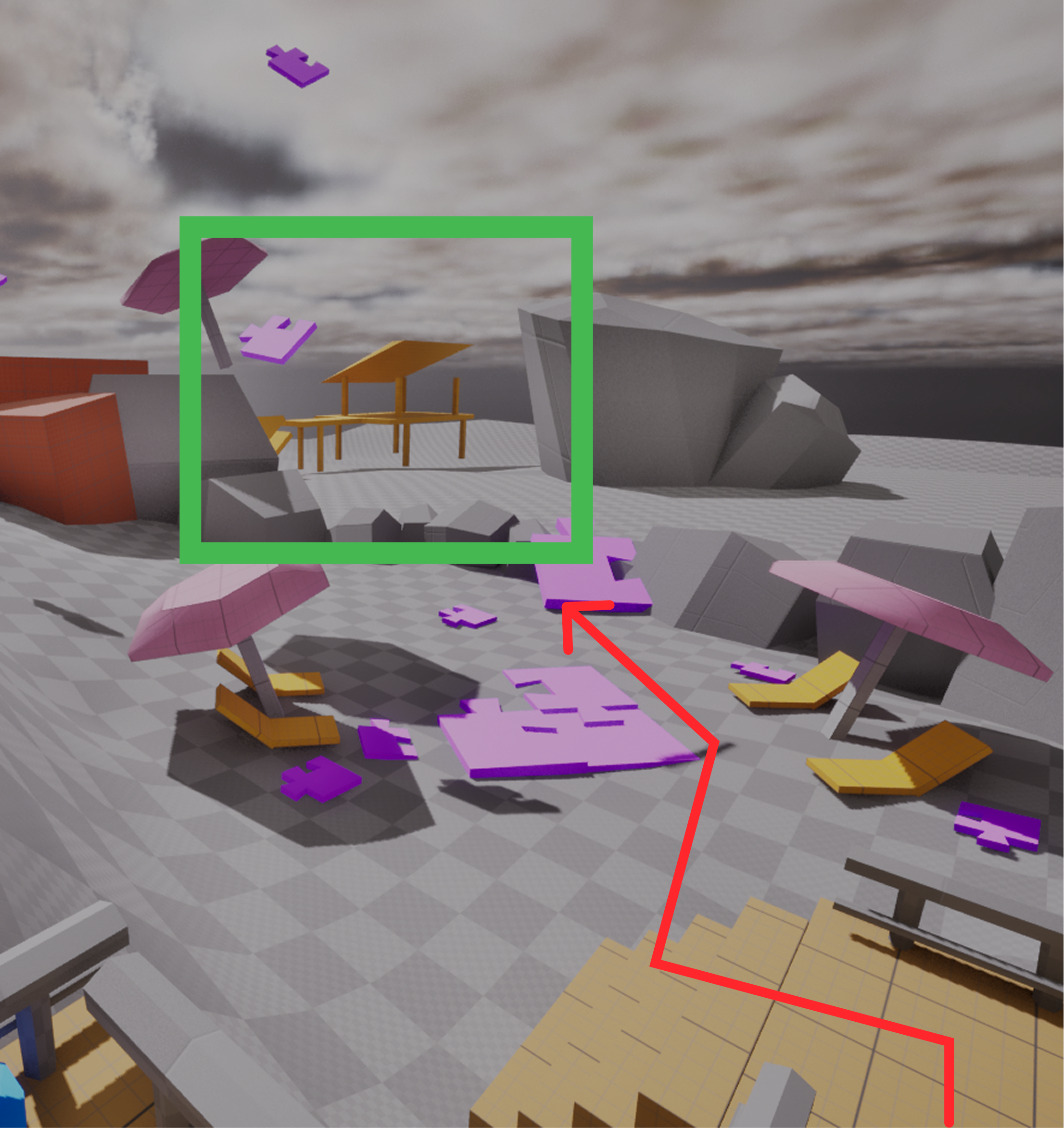
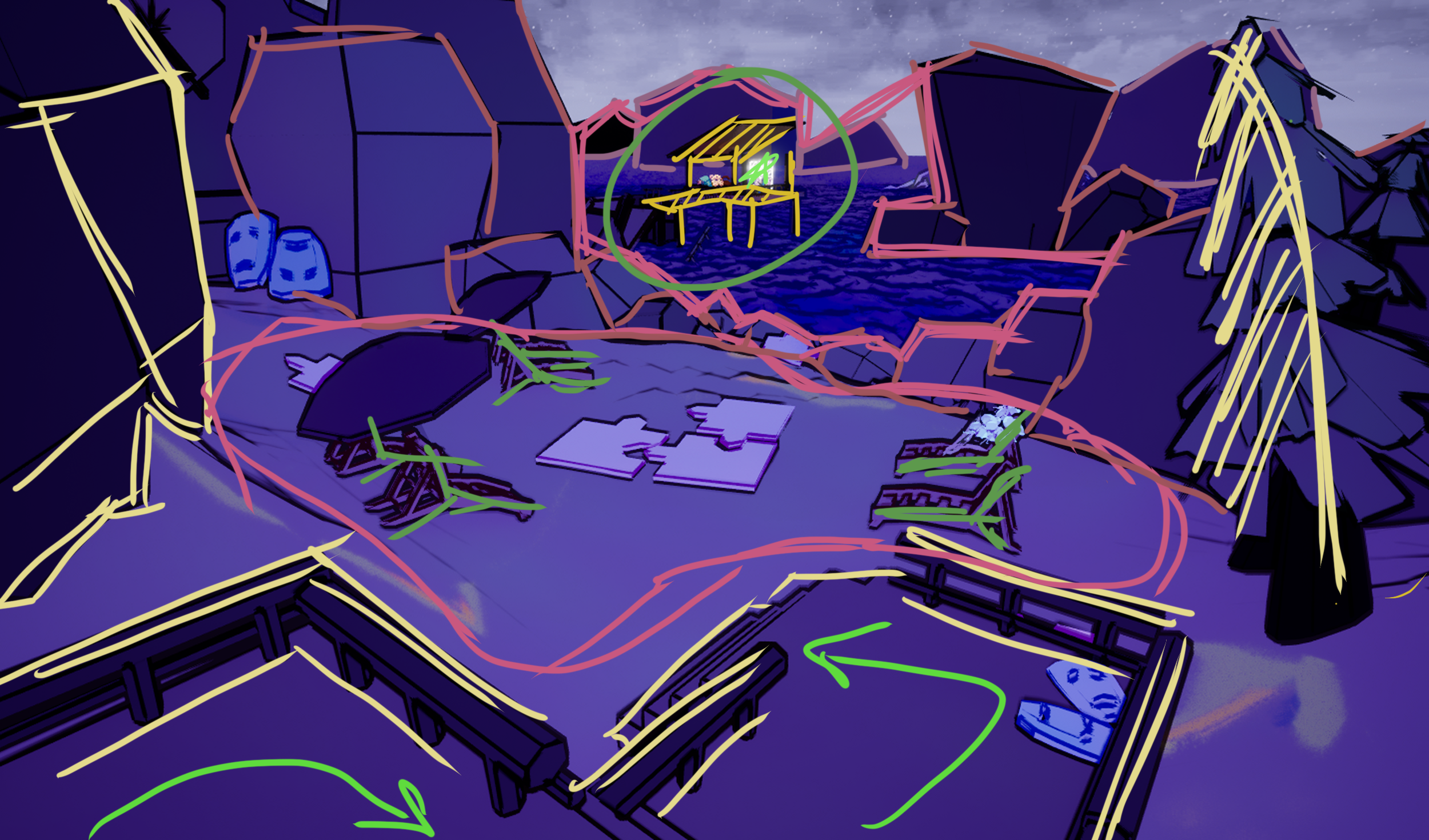
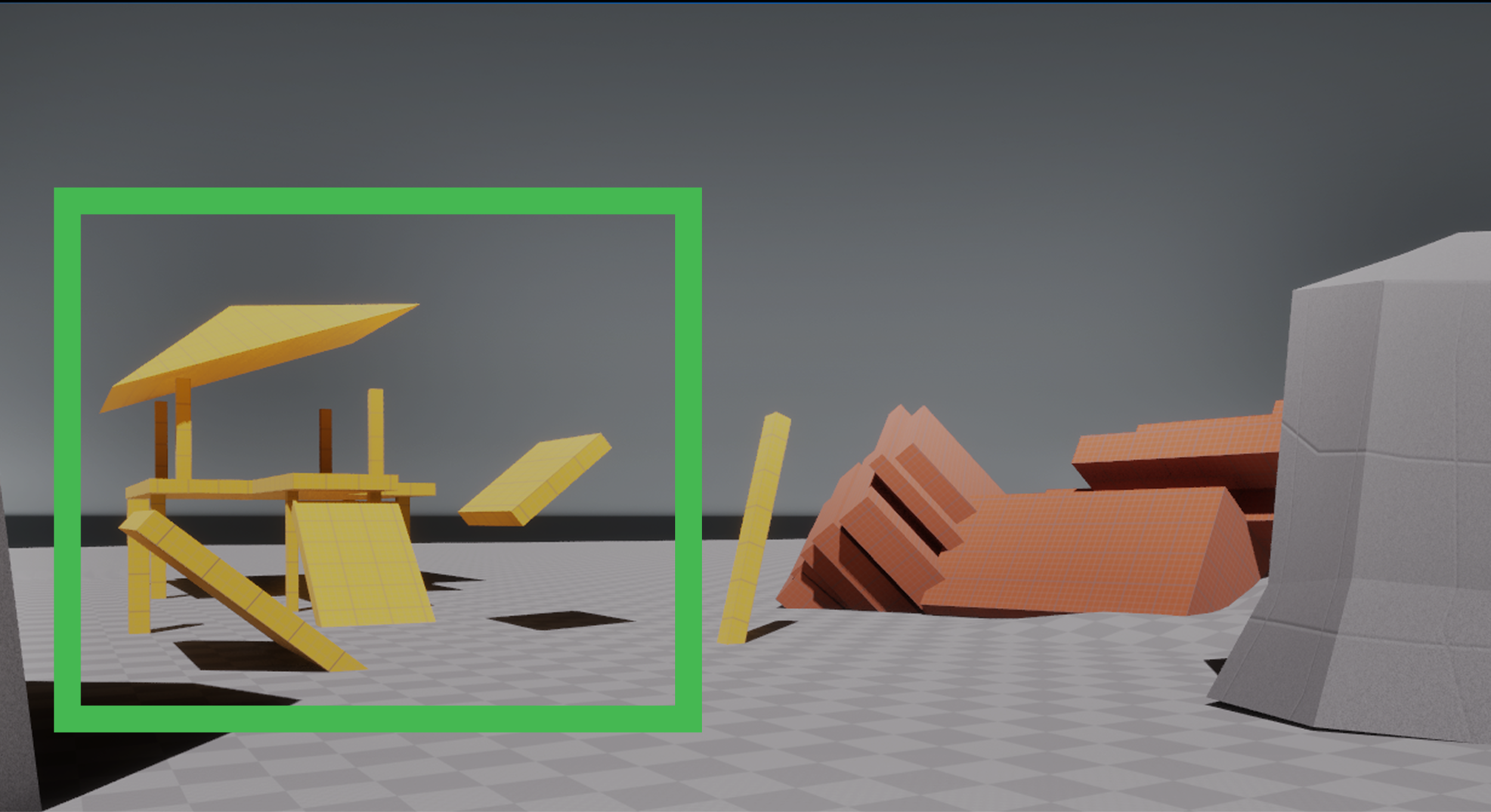
The Pier is the player’s final destination, where the painting is located, so it naturally became the primary landmark
Framing and Composition
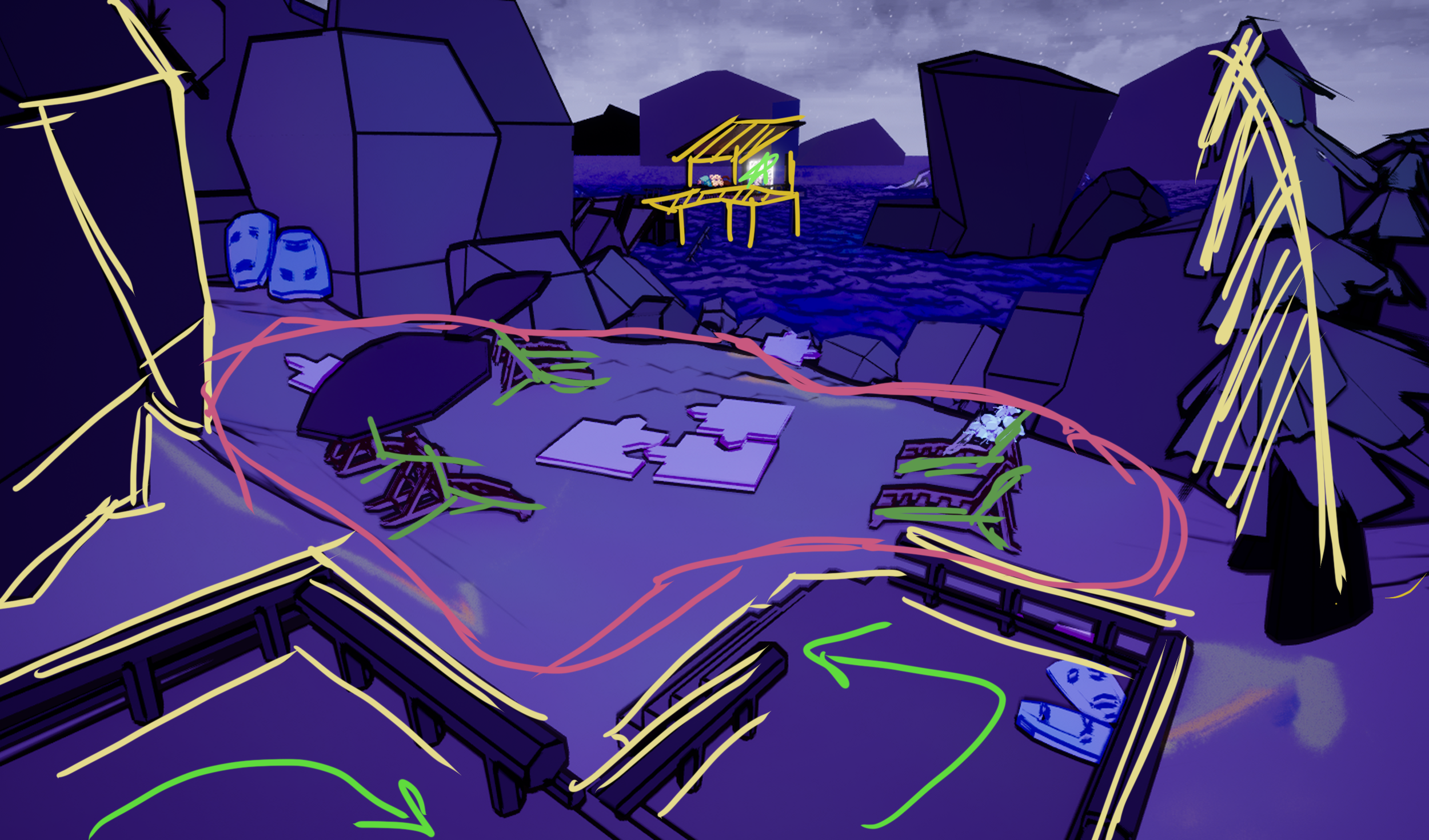
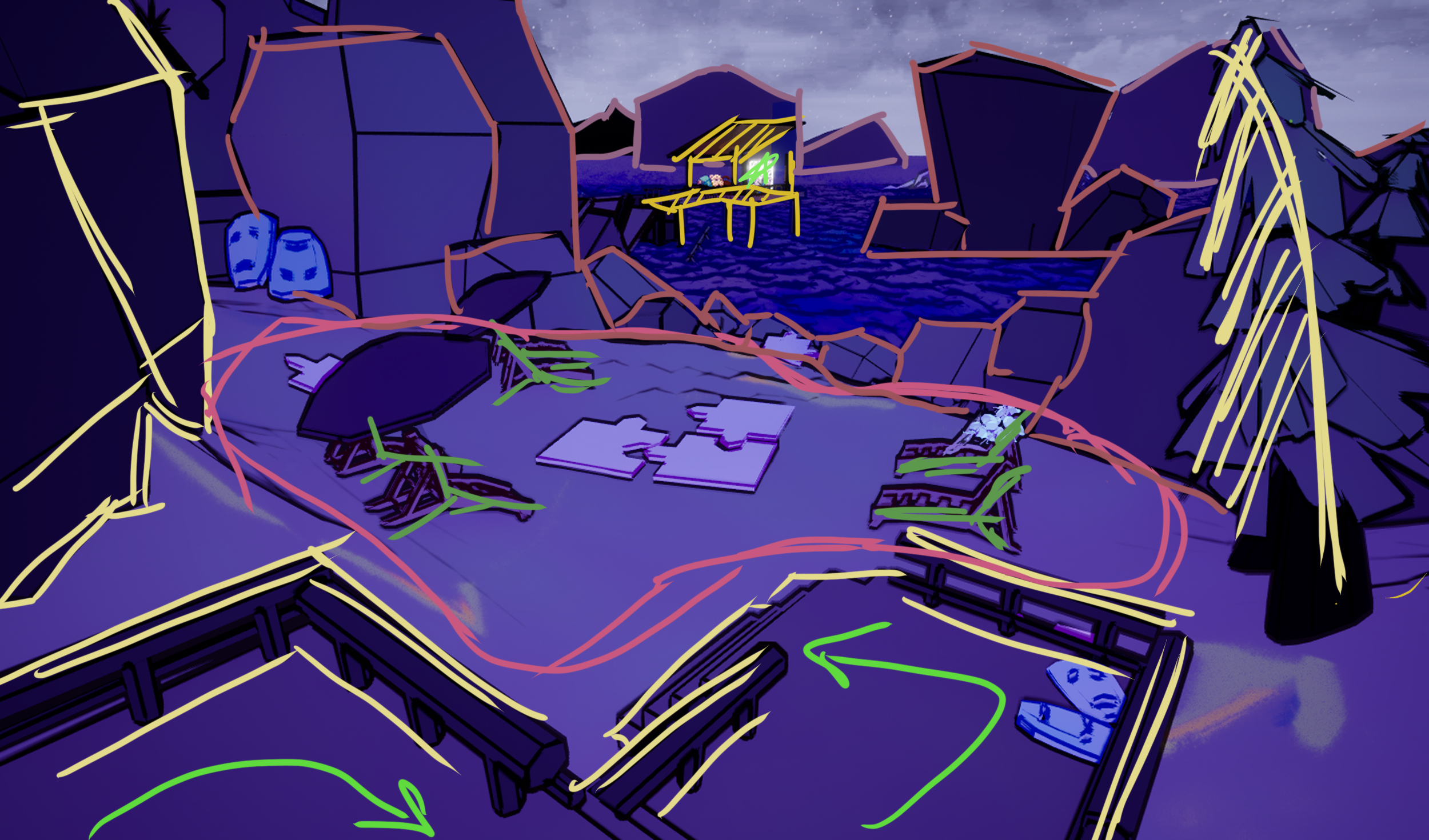
To help the player orient themselves toward the goal, I use scene composition to show the Pier from different vantage points throughout the level
At the beginning, the player is funneled toward a vista where the pier slowly comes into view, with rocks and trees framing the scene

By using clear foreground, middle ground, and background layers, I can ensure the Pier stands out as the player’s goal